
Please find below the seventh article related to information gathered from the 2025/2026 Patient Experience Survey. This article summarizes survey results relating to medications and their side effects. There were 126 respondents who provided input to this section of the survey. The results demonstrate the complexity of treating lupus and the many impacts of the disease and current treatments.
Key Highlights
- Lupus patients must take a combination of medications to keep their disease and its many symptoms under control.
- 1 in 3 lupus patients take steroids (prednisone).
- 67% of patients experience side effects from taking steroids (prednisone).
Daily Dose of Steroids (Prednisone)
Steroids are a common medication used to control lupus flares and to treat symptoms. Respondents indicated their daily dose:
- 18.6% – less than 7.5 mg
- 6.4% – between 7.6 mg to 10 mg
- 3.2% – between 11 mg to 20 mg
- 4.8% – more than 20 mg
- 67.4% – reported that they were not currently taking steroids
Steroids (Prednisone) Side Effects
Steroids can have many side effects that can impact the daily lives of lupus patients. Respondents selected the side effects which they have experienced while taking steroids. The most common side effects were:
- Weight gain – 81.2%
- Mood changes – 55.3%
- Fluid retention – 51.8%
- Insomnia – 43.5%
- Hair loss – 41.2%
Other side effects noted are shown in the chart below.
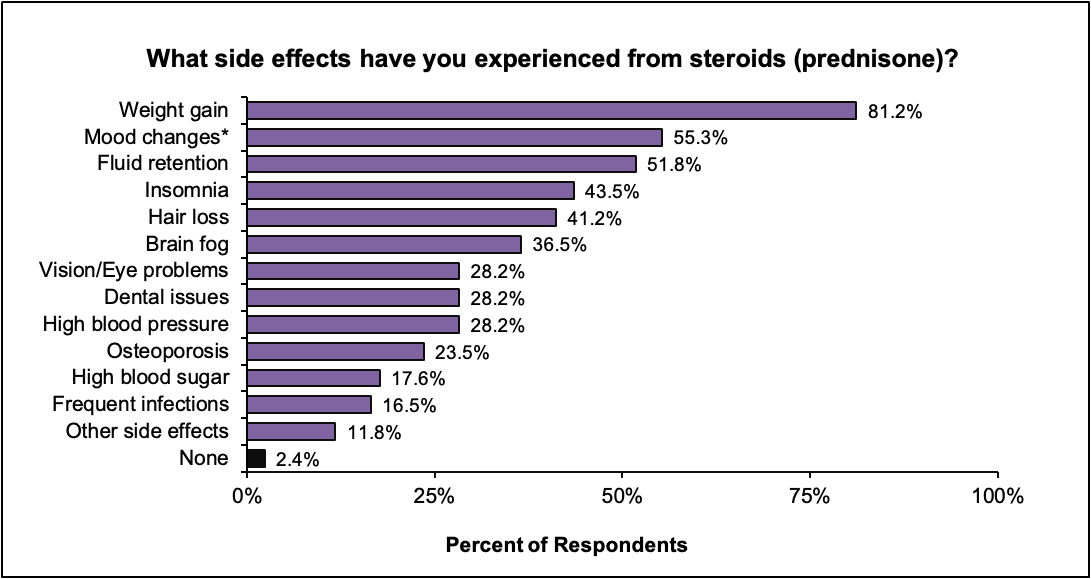
*Mood changes include depression and anxiety, as examples. Other side effects include, but are not limited to, weakness, appetite changes, headaches and vomiting.
Changes in Steroid Dose Over Time
It is very common for a patient’s steroid dose to change over the course of their lupus journey. A physician may increase a patient’s steroid dose when a flare occurs. When a physician decreases a patient’s steroid dose, their lupus may be stable or in remission. Respondents shared how their steroid dose has changed over the course of their lupus journey.
- Dose varied based on flares and doctors’ recommendations – 27.0%
- Stopped taking steroids – 20.6%
- Decreased dose – 9.5%
- Increased dose – 3.2%
Non-Steroidal Medications Taken to Control Lupus
In addition to steroids, many other medications are often used to manage symptoms. Respondents were asked to identify all the non-steroidal medications they were taking. Common non-steroidal medications noted include:
- Plaquenil (Hydroxychloroquine) – 78.6%
- Acetaminophen (Tylenol) – 48.4%
- Non-steroidal Anti-Inflammatory Drugs (NSAIDs) – 30.2%
- CellCept (Mycophenolate Mofetil) – 19.8%
For the many other medications respondents were taking, please refer to the chart below. None of the medications identified in our survey are specifically recommended for treating lupus. The disease is generally managed by trying a variety of medications to see which ones result in the most effective treatment of symptoms.
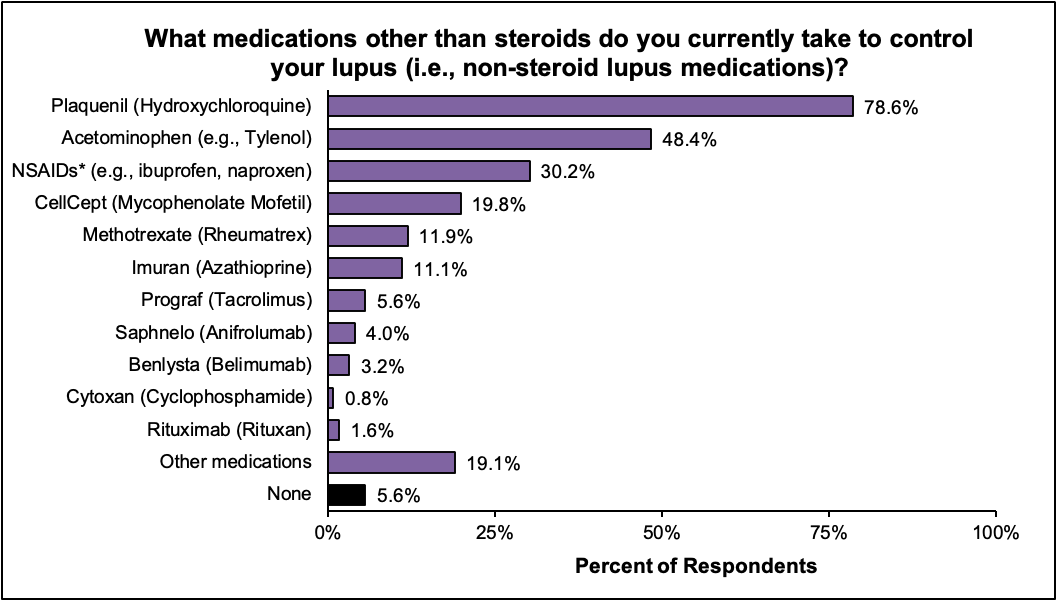
Other medications reported included Ultomiris, Mycophenolic, Leflunomide, Diclofenac, Sirolimus, Sulfasalazine, Lyrica, Myfortic, Celebrex, Methotrexate, Atorvastatin, Adalimumab and others.
Side Effects from Non-Steroidal Medications that Impact Daily Life
Lupus patients suffer from a variety of side effects from both steroid and non-steroidal medications. These side effects can negatively impact the patient’s quality of life and ability to carry on daily activities. The most common side effects which respondents reported were:
- Weight loss or gain – 46.4%
- Indigestion/gastric issues – 45.6%
- Fatigue – 44.0%
- Brain fog – 36.0%
- Hair loss – 32.0%
Additional side effects noted are included in the chart below.
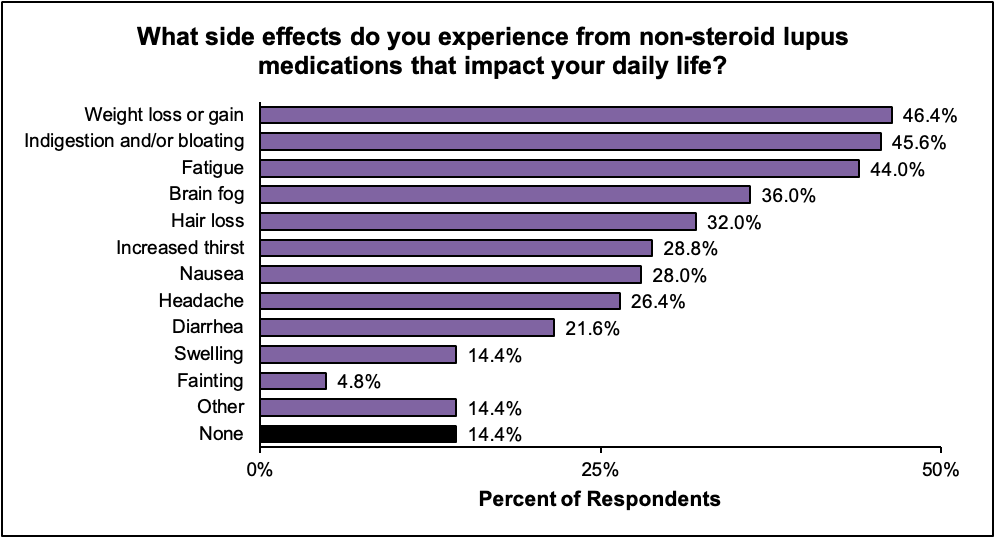
Other side effects reported include, but are not limited to, pain, insomnia, dizziness, hives, vasculitis, tremors, loss of appetite, heartburn and mood changes/worsened mental health.
Non-Steroidal Medications Creating Major Medical Implications
In addition to experiencing side effects, some respondents indicated that they experienced major medical implications when taking non-steroidal medications. Major medical impacts identified were:
- Gastric issues – 24.8%
- Eye issues – 14.4%
- Mental health issues – 12.8%
- Cognitive issues – 11.2%
Other major medical impacts are shown in the chart below.
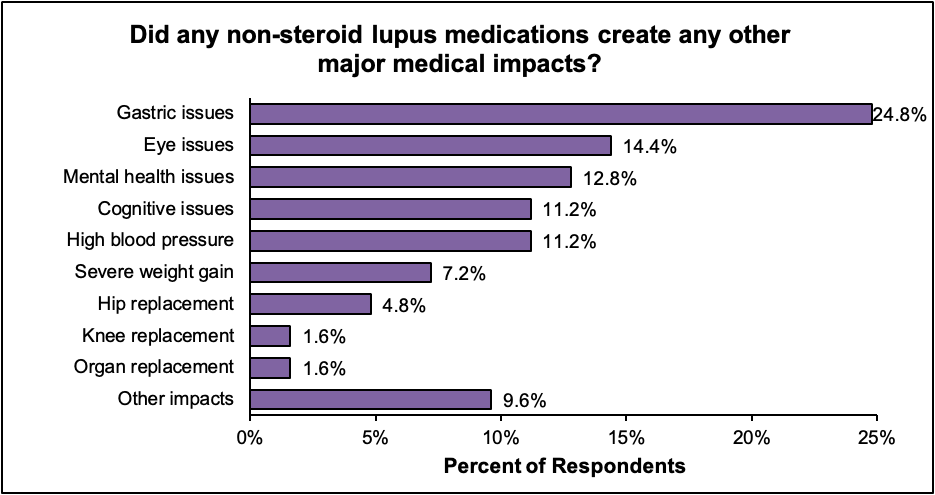
Other impacts reported include heat rash, impacts to renal function and low white blood cell count.
What Happens If You Do Not Take Your Medications?
Compliance with prescribed medications is very important to managing lupus. Two-thirds of respondents indicated that if they did not take their medication, they experienced an increase in flares. Others noted that not taking their medication would result in:
- Increase in flares – 68.4%
- Unable to attend work or school – 16.8%
- Require additional caregiver support – 15.2%
- Hospitalization – 12.0%
- Other – 20.8%
The most common symptom reported under “Other” was increased pain.
Conclusion
The survey results demonstrate that the complexity of lupus necessitates that most patients require a mix of medications to keep the disease and its many symptoms under control. The treatments currently used were not developed specifically for lupus.
There is an urgent need for further research and investment in new and more effective treatments for lupus. Access to appropriate medications is essential to controlling disease activity, preventing organ damage, improving quality of life, and reducing reliance on corticosteroids, which can cause significant side effects with long-term use.
Newer biologic therapies developed specifically to treat lupus have demonstrated promising results, including improved disease management and the potential to reduce steroid use. Currently, three biologic medications are approved in Canada for lupus: belimumab, anifrolumab, and obinutuzumab.
While several additional biologic therapies are in development, progress through clinical testing and the regulatory and public reimbursement approval processes can be lengthy. Accelerating research, clinical trials, and Health Canada approval, alongside timely provincial funding and access decisions, is critical to ensuring that people living with lupus can benefit from new treatment options.
Improving access to effective, safe, and innovative medications is essential to better managing this complex disease, reducing its long-term burden, and improving outcomes for people living with lupus.
Read the previous section.