
Lupus Symptoms, Comorbidities and Major Organ Impacts
In the last quarter, Lupus Ontario launched a Patient Experience Survey to better understand the impact of lupus on individuals living with the disease and their caregivers. Below are the key findings from the second section of the survey.
Lupus is a complex autoimmune disease that can affect any organ of the body. Lupus Ontario recently surveyed the lupus community to learn more about patient experiences. The large number of symptoms and comorbidities reported demonstrates the complexity of the disease and contributes to the challenges in coming to a diagnosis of lupus.
This report provides a summary of survey findings related to symptoms, comorbidities and major organ impacts. A total of 133 survey responses were received for the following sections of the survey which covers lupus symptoms, comorbidities and major organ impacts.
Current Lupus Symptoms
The most common symptoms experienced by lupus patients were:
- Fatigue 0%
- Joint pain 2%
- Muscle Pain 7%
- Sun Sensitivity 9%
- Brain Fog 1%
There are many other symptoms included in the graph below. The multitude of symptoms reported would suggest how challenging life can be for lupus patients in carrying out their daily activities. Only 5.3% of respondents reported no symptoms.
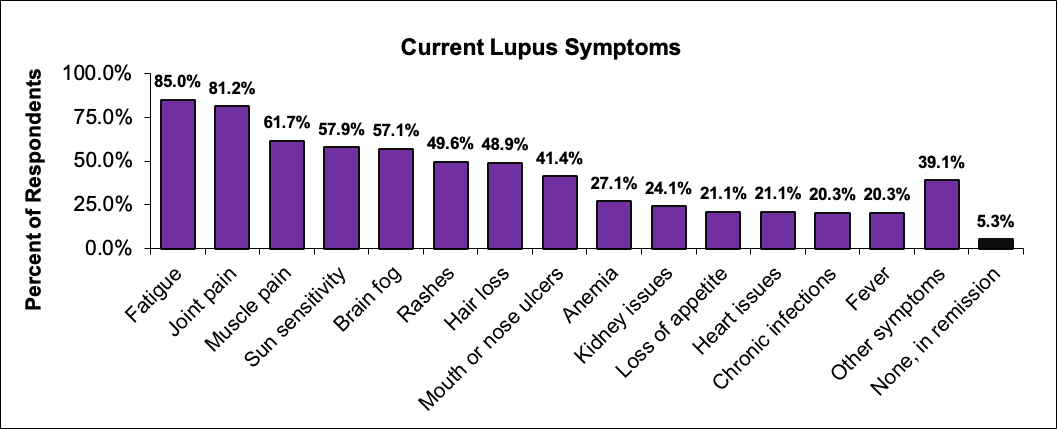
‘Other symptoms’ reported (39.1%) include but are not limited to: blood clotting issues, lung issues, jaw pain, nerve pain, bladder inflammation, and mental health challenges.
Other Autoimmune or Inflammatory Conditions (Comorbidities)
Comorbidities refer to other diseases or conditions that a patient may have other than lupus. Multiple comorbidities are very common in lupus patients. This adds to the complexity in diagnosing and treating the disease.
The most common comorbidities were
- Raynauds 6%,
- Rheumatoid Arthritis 6%
- Arthritis 34%
- Sjogren’s 3%
- Fibromyalgia 8%
Only 10.5% of respondents indicated they had no comorbidities. Several respondents reported more than one comorbidity. Details are in the chart that follows.
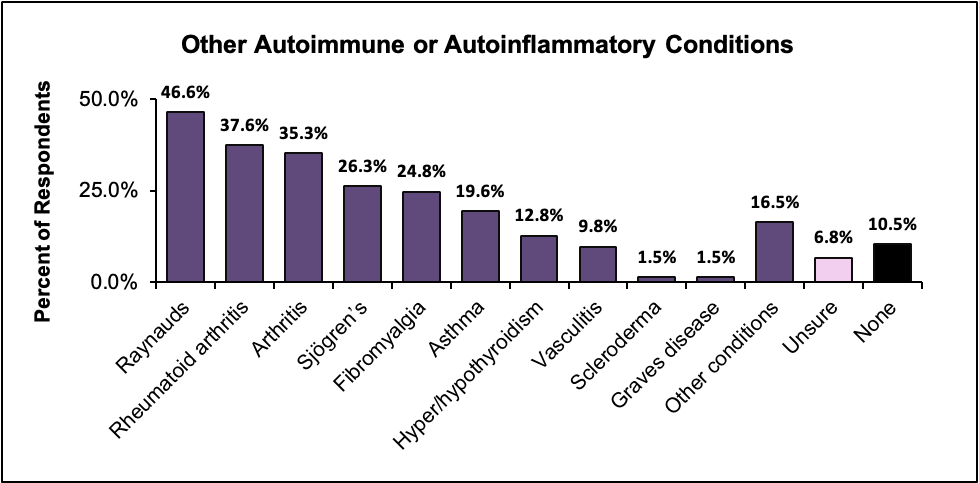
‘Other conditions’ reported (16.5%) include but are not limited to: Pericarditis, Lipoproteinemia, Multiple Sclerosis, Chronic Obstructive Pulmonary Disease (COPD), and Chronic Inflammatory Demyelinating Polyneuropathy (CIDP).
Major Organ Impact of Autoimmune / Autoinflammatory Conditions (including lupus)
Left unchecked autoimmune / autoinflammatory conditions can cause major organ damage. This is why early diagnosis and treatment are so critical to avoiding or minimizing any major organ damage. Only 21.1% of respondents indicated no major organ involvement. Some respondents reported more than one major organ impact.
The most common major organs impacted were:
- Musculoskeletal 1%,
- Kidneys 1%
- Skin 6%
- Heart / Vascular 1%
- Lungs 8%
For other major organ impacts refer to the chart below.
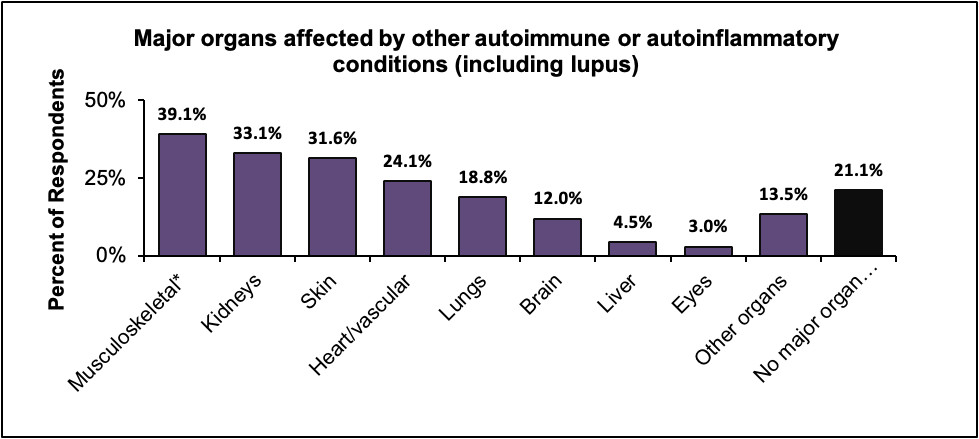
‘Other organs’ reported (13.5%) include heart and nerves.
*Musculoskeletal includes but is not limited to joints and muscles.
Major Organ Transplants or Joint Replacements
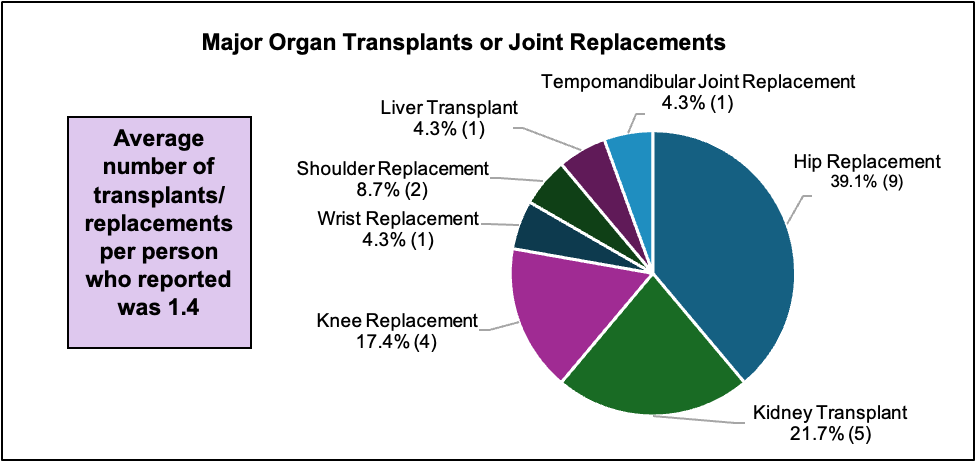
In total, 23 organ transplants or replacements were reported by 16 respondents for an average of 1.4 transplants or replacements per person. The most common joint replacements were hips and knees, and the most common transplant was kidneys.
Conclusion
In conclusion, the Lupus Ontario survey of 133 patients highlights lupus as a highly complex, multi-system autoimmune disease that severely impacts daily life and complicates clinical diagnosis. The findings reveal that a vast majority of patients struggle with debilitating symptoms like fatigue (85%) and joint pain (81.2%), while nearly 90% manage additional comorbidities, most notably Raynaud’s and arthritis. Furthermore, the disease frequently escalates to severe bodily harm, with nearly 80% of respondents experiencing major organ involvement—primarily affecting the musculoskeletal system, kidneys, and skin—and 12% requiring major organ transplants or joint replacements. Ultimately, these widespread impacts underscore the critical need for early diagnosis, targeted treatment strategies, and robust patient support systems to mitigate long-term organ damage and improve overall quality of life.