
Lupus Ontario Patient Experience Survey: Caregiving Experiences and Challenges
At the end of 2025, Lupus Ontario launched a Patient Experience Survey to better understand the impact of lupus on individuals living with the disease and their caregivers. Below are the key findings from the fourth section of the survey.
Key Highlights:
- Caregiver support is often needed: almost two-thirds of respondents reported needing caregiver support during a lupus flare.
- Personal caregivers provide most of this support: almost all respondents with a caregiver rely on a family member, partner, friend, or other personal (rather than paid) caregiver.
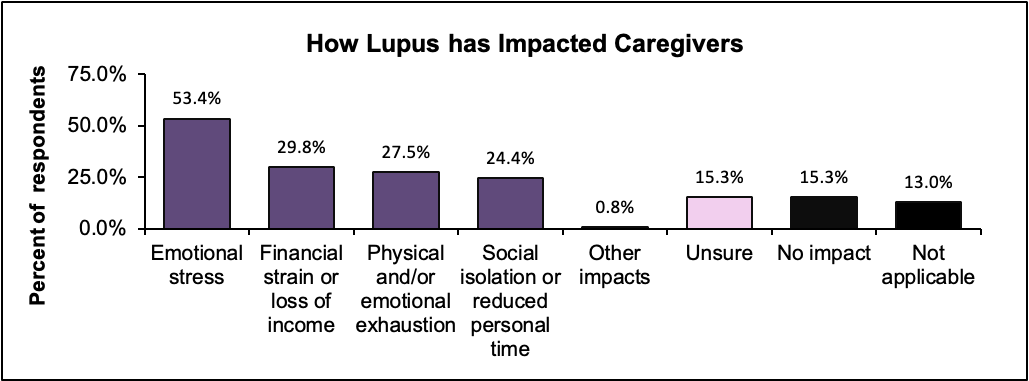
- Caregiving can be challenging: over half of respondents report emotional stress as an impact of providing care, with some also reporting financial strain, social isolation, and physical and/or emotional exhaustion.
Detailed Findings:
Lupus can have a significant impact on not only individuals living with the disease, but also on their family members, friends and other caregivers who support them. Lupus Ontario recently surveyed the lupus community to better understand lupus patients’ need for caregiving and that challenges associated with being a caregiver.
This report provides a short summary of survey findings from the 131 respondents who responded to questions on these topics.
Need for Caregivers
Regarding the need for caregivers:
- 66.4% of respondents reported needing, or sometimes needing, caregiver support when they are in a flare.
- 73.3% of respondents reported having a caregiver, and of those, 97.9% (or 94 of 96 respondents who reported having a caregiver) noted that their caregiver was personal – meaning a family member, partner, friend etc.
- 4.6 % (or 6 respondents) reported needing a caregiver when they are in a flare but they also reported not having a personal or paid caregiver to provide this support.
Impacts of Caregiving
The reported impacts of lupus on caregivers were:
- Emotional stress 53.4%
- Financial strain 29.8%
- Social isolation 24.4%
- Physical and/or emotional exhaustion 27.5%
Other impacts – severe mental health issues like depression and substance abuse – were reported by one respondent (0.8%). Additionally, some respondents reported that they weren’t sure if there was an impact (15.3%), or that there was no impact (15.3%).
Conclusion.
These findings highlight the importance of caregivers in supporting lupus patients, particularly during flares, with most patients relying on family members or friends rather than paid caregivers, to provide this support. Unfortunately, providing care and support for lupus patients can have a range of negative impacts on caregivers themselves, underscoring the need for greater recognition and support for not only people living with lupus but also those who provide their care. Ultimately, these findings highlight the importance of ensuring that caregivers have access to support, resources, and assistance to help manage the demands associated with providing care and support to lupus patients.
Explore More Patient Experience Survey Findings
Read Section 1 – Diagnosis Summary
Read Section 2 – Disease Impacts
Read Section 3 – Impact of Lupus Flares